
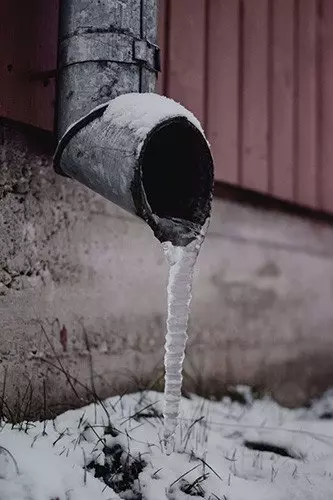
Although your home may be warm, be cautious in January and February, particularly. If the temperature drops below freezing outside, it could ruin Valentine's Day (and the rest of the month) for you if your pipes freeze.
Even if temperatures don't normally drop below freezing where you live, we also know that the climate can be unpredictable at times. Sudden weather changes could result in a surprise drop in the thermometer. The result is not pleasant.
When temperatures drop below freezing, water in pipes freezes. When water freezes, it expands. When water expands, it can block a pipe, preventing water from flowing, and worse yet, it could even burst the pipe it's in. It can turn a quiet February day (or a romantic Valentine's evening) into a nasty surprise.
"Why's there water on the kitchen floor?" you might ask.
And then you go downstairs to discover that it's even worse: The copper pipes that carry water under pressure from your municipal water supply throughout your house have frozen and burst, and now water is gushing into your basement. It's clean water, but there's a lot of it. It can damage a beautiful basement, and if not cleaned up promptly, it can develop into mold and become a hazardous health hazard.
Typically, it's your cold water supply (rather than the hot water supply from your water heater) that will freeze first, since this water is colder. Rarely will your drain pipes freeze and clog unless they are full and the temperature is extremely cold. The pipes to pay attention to most are the cold water supply pipes.
So, how can you prevent frozen pipes in the Kansas Winter?
The first step is: don't think it can't happen to you! Temperatures can unexpectedly drop.
If you know that temperatures are likely to go down, make sure you are prepared. Turn on the heat in your home, close the windows, and ensure the ambient temperature around your pipes is above freezing.
(And if you're going away for a winter vacation, don't turn your heat off in your home while you're away; that will help to keep the temperature above freezing so your pipes don't burst while you're away.)
Pay particular attention to pipes that run through exterior walls. Two examples include:
- Any pipes that run from the inside of your house to the outside, such as a pipe that supplies your garden hose or your water sprinkler system
- Any pipes that run to your kitchen sink (especially if your kitchen sink is in front of a window—that's an exterior wall)
Depending on how quickly temperatures drop and how cold they get, one option is to leave your faucet dripping slightly. While this can seem like a waste of water that raises your water bill, it's a very small price to pay to protect yourself from a disastrous flooded basement.
If your pipes do freeze, you'll know when you turn on the water and nothing comes out. If this happens, address the issue immediately, as any further water freezing will require a place to expand, potentially leading to a burst pipe.
Increase the temperature in your home to help thaw the pipes. If the pipes are really frozen, it's time for emergency action! Turn on your faucet, ensure the drain is clear, and then use a hair dryer. Aim the hair dryer near the pipe, starting from the part closest to the faucet, and run it slowly along the length of the pipe back to the source.
Summary
Hopefully it never happens to you! However, you can't be too careful, so be sure to follow these simple tips to prevent this threat from happening to you in January or February, allowing you to focus on enjoying the winter. If you do have issues, contact Smith Plumbing of Manhattan, KS!